
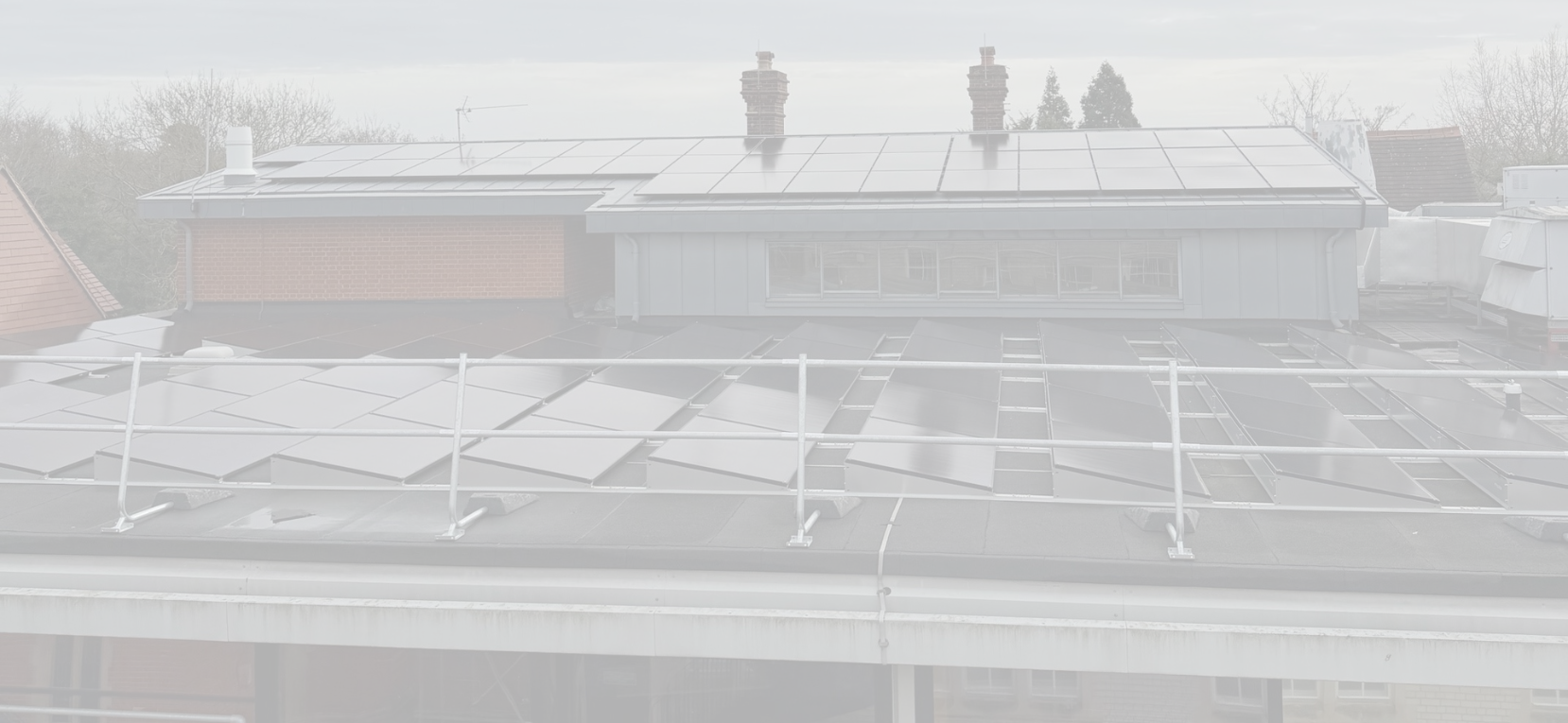
Safe roof access is an essential part of managing commercial and industrial buildings.
Whether carrying out planned maintenance, servicing HVAC equipment, inspecting solar PV systems or maintaining rooftop plant, anyone working at height must be protected by appropriate fall prevention measures. For many organisations, permanent roof edge protection provides a safer, more practical and more cost-effective alternative to repeatedly installing temporary access equipment.
This guide explains the role of commercial roof edge protection systems, the different solutions available and why integrated design can deliver significant long-term value.
Why Roof Edge Protection Matters
Commercial rooftops are increasingly becoming active working environments.
Air conditioning systems, ventilation equipment, communication infrastructure, solar PV installations and other mechanical services all require regular inspection and maintenance throughout their operational life.
Providing safe access to these areas is not simply good practice—it is an important part of meeting responsibilities under the Work at Height Regulations 2005 and protecting employees, contractors and visitors from the risk of falls.
Permanent roof edge protection creates a clearly defined safe working area, reducing reliance on temporary measures while improving safety for everyone accessing the roof.
Permanent or Temporary Access?
Temporary scaffolding remains appropriate for many construction projects, particularly where major roof repairs or refurbishment works are being undertaken.
However, buildings requiring regular rooftop access often benefit from a permanent roof safety system instead.
Unlike temporary access equipment, fixed or freestanding handrail systems remain in place throughout the life of the building, allowing maintenance teams to access rooftop equipment safely whenever required without arranging additional scaffolding for each visit.
For many commercial property owners, this approach can reduce long-term maintenance costs while simplifying future access.
Choosing the Right Roof Edge Protection System
Every commercial building has different structural and operational requirements.
Where suitable, mechanically fixed systems can be installed directly to structural elements, providing permanent collective fall protection.
For many flat roofs, however, non-penetrative ballast-mounted systems offer an effective alternative. These freestanding systems avoid penetrating the roof membrane, helping preserve waterproofing systems and reducing the risk of affecting existing roof warranties.
The most appropriate solution should always be determined following a detailed site assessment and engineering review.
Engineering-Led Design
Roof edge protection should never be treated as an off-the-shelf product.
Every installation should be designed specifically for the building, taking into account roof layout, wind loading, structural considerations, rooftop equipment and future maintenance requirements.
At Silvercrest Energy Group, systems are designed using AutoCAD and supported by detailed engineering calculations to ensure ballast distribution, structural loading and overall system performance are appropriate for each individual site.
This design-led approach helps ensure every installation delivers both long-term safety and long-term reliability.
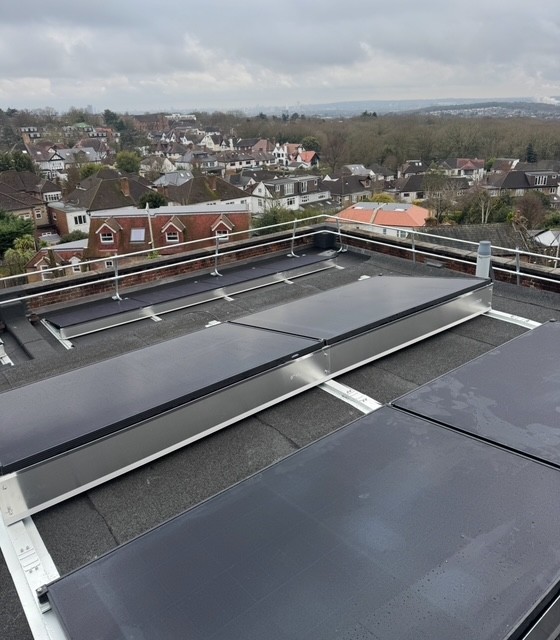
Integrating Roof Safety with Commercial Solar
Many commercial buildings require both roof edge protection and solar PV.
Designing these systems together allows engineers to coordinate the positioning of solar mounting systems and safety handrails, preventing conflicts between ballast locations, access routes and maintenance areas.
This integrated approach can improve installation efficiency, reduce unnecessary materials and provide safe access for future inspection and maintenance of the solar installation throughout its operational life.
Considering both systems during the design stage often delivers better long-term value than installing them independently.
The Benefits of an Integrated Delivery Team
Commercial roof projects frequently involve multiple specialist disciplines, including roofing, scaffolding, fall protection, structural engineering and electrical installation.
Managing numerous contractors can increase project complexity, create coordination challenges and extend programme durations.
Silvercrest Energy Group brings these disciplines together under a single project management structure, providing clients with one experienced team responsible for planning, coordination and delivery.
This integrated approach helps reduce risk, improve communication and ensure every aspect of the project is designed to work together.
Which Buildings Benefit from Permanent Roof Edge Protection?
Permanent handrail systems are suitable for a wide range of commercial properties where regular rooftop access is required.
These include warehouses, manufacturing facilities, office buildings, schools, hospitals, retail premises, logistics centres, public sector buildings and commercial property portfolios.
Where maintenance teams or contractors require routine access throughout the year, permanent roof safety systems can provide significant operational and financial advantages.
How Silvercrest Energy Group Can Help
Silvercrest Energy Group designs and installs bespoke roof edge protection systems for commercial and industrial buildings across the UK.
Our services include site surveys, engineering design, AutoCAD layouts, ballast and fixed handrail systems, integrated commercial solar design and complete project management.
By combining expertise in roofing, access systems and renewable energy infrastructure, we deliver coordinated solutions that improve safety, simplify maintenance and support long-term building performance.
Final Thoughts
Permanent roof edge protection is far more than a compliance requirement.
When professionally designed, it improves safety, reduces long-term maintenance costs and provides reliable access to the equipment that keeps commercial buildings operating efficiently.
Whether installed as part of a commercial solar project or as a standalone roof safety upgrade, an engineering-led approach ensures the system continues delivering value throughout the life of the building.
Frequently Asked Questions
Why would I install permanent roof edge protection?
Permanent systems provide safe access for routine maintenance while reducing the need for repeated temporary scaffolding installations.
Are ballast-mounted handrail systems better than fixed systems?
Neither system is universally better. The most appropriate solution depends on the roof construction, structural design and operational requirements of the building.
Can roof edge protection be installed alongside commercial solar?
Yes. Designing both systems together allows engineers to coordinate access routes, ballast locations and maintenance areas, improving both safety and installation efficiency.
Will a ballast-mounted system damage my roof?
Professionally designed ballast systems are intended to avoid penetrating the roof membrane, helping preserve waterproofing systems where appropriate.
How do I know which roof safety system my building needs?
A professional site survey and engineering assessment will determine the most suitable roof edge protection solution based on the building’s structure, access requirements and future maintenance needs.