
For UK businesses, rising energy costs are no longer a short term issue – they’re a structural challenge. In 2026, more commercial property owners across the South East are turning to solar PV as a long term hedge against volatility.
But one question consistently comes up:
“What is the real payback period for commercial solar?”
This guide breaks it down with realistic figures, current incentives and what actually impacts ROI for businesses in Essex, Kent, Suffolk and the wider South East.
What Is a Solar Payback Period?
The payback period is the time it takes for your solar investment to repay itself through reduced electricity bills, export revenue and tax incentives and capital allowances. Once this period is reached, your system is effectively generating free electricity for the remainder of its lifespan – typically 30 years or more.
Average Payback Period in the UK
For commercial solar installations in 2026:
- Typical payback period: 4-7 years
- High energy usage sites: 3-5 years
- Low energy usage sites: 6-8 years
In the South East – where electricity prices remain above the UK average – businesses often sit at the lower end of this range.
Key Factors That Affect Payback
Energy Consumption Profile
The more electricity you use during daylight hours, the faster your payback period. Warehouses, factories and offices with daytime operations benefit most, with businesses operating 9-5 seeing optimal solar utilisation. Self-consumption is significantly more valuable than exporting energy.
System Size and Design
A properly designed system accelerates ROI. Oversized systems may export too much energy at lower rates, with undersized systems limiting savings potential. At Silvercrest Energy, systems are engineered to match load profiles, not just roof space.
Electricity Prices
Commercial electricity rates remain volatile, typically 20-30p per kWh, or higher depending on contract. Every unit of solar energy offsets grid electricity at these rates, which is why solar ROI has strengthened significantly since 2022.
Export Rates and Smart Export Guarantee (SEG)
Excess energy can be sold back to the grid. Typical SEG rates range from 5-15p per kWh exported, far lower than import costs, reinforcing importance of self-use.
Capital Allowances and Tax Benefits
UK businesses can take advantage of full expensing and capital allowances, with corporation tax relief on solar investments. This can reduce upfront cost impact and shorten payback by 6-18 months in many cases.
Battery Storage
While optional, battery storage can be strategic in long term savings. Adding battery storage can increase self-consumption, reduce peak time grid usage and improve energy independence. However, batteries typically extend payback periods slightly (due to added cost), but do improve long term returns and resilience.
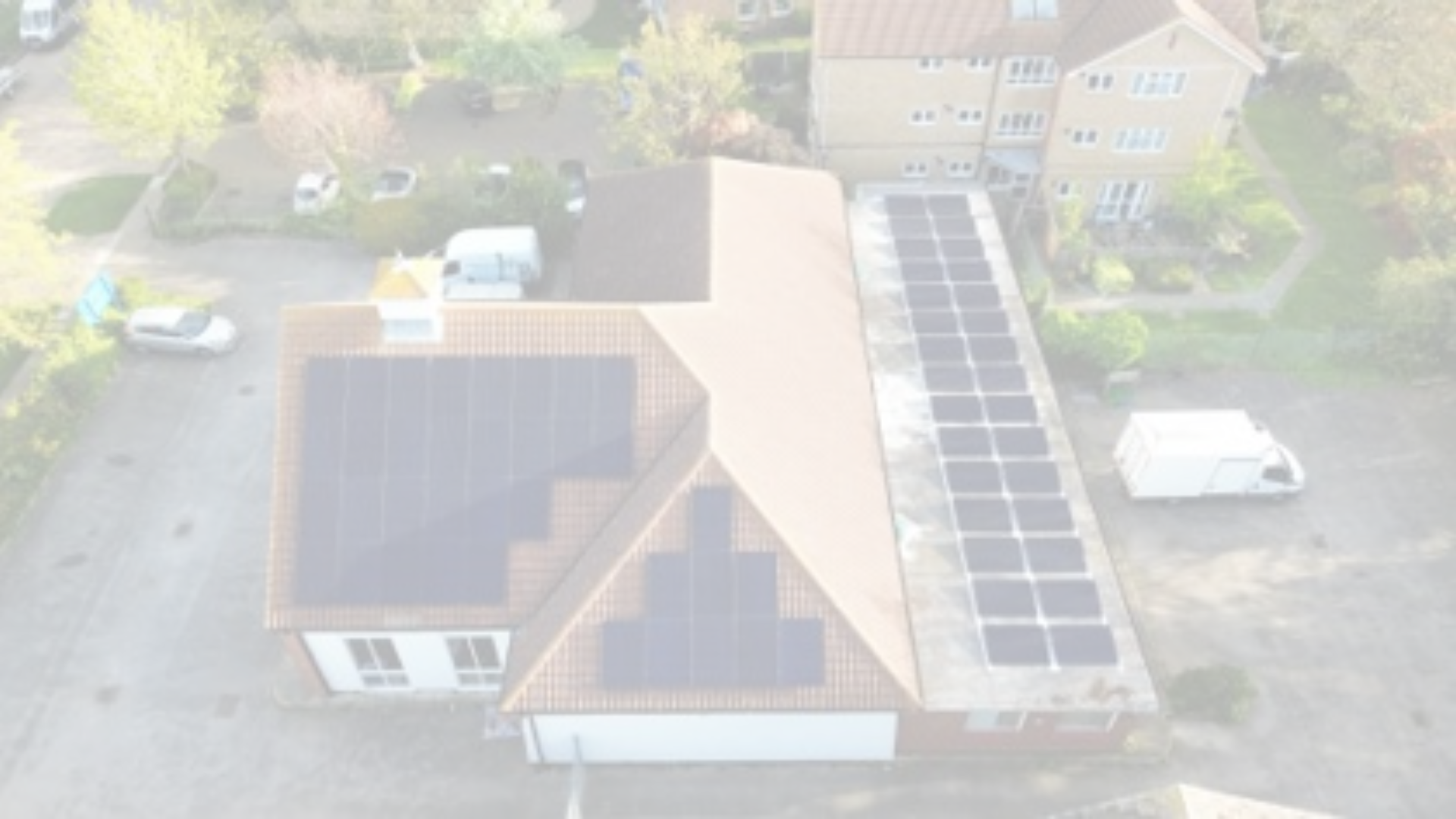
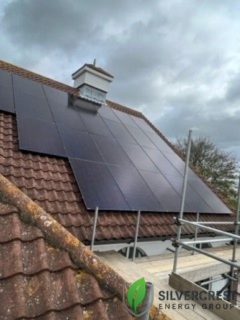
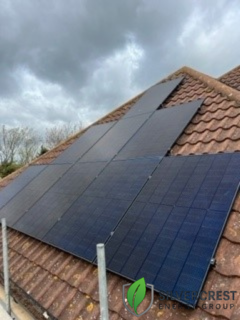
Real World Example – Whittingham Methodist Church
The Experience Project, based at Whittingham Methodist Church in Southend on Sea, Essex, reached out to us to see what a solar PV and battery storage system could save them on their energy bills. Worrying about the payback period, we designed a system with clear energy projections of a 6 year payback period.
System Specification
- System size: 27.06 kWp
- Panels installed: 66x Amerisolar 410W panels
- Inverter: Sofar 3-phase
- Installation date: April 2024
- Battery system: Voltsmile H1 20.48kWh
After a year we revisited and found the system was performing above pre-installation estimates.
- Estimated annual savings: £8,033 compared to £5,846 pre-installation
- Estimated lifetime ROI: £591,135 compared to £284,817 pre-installation
- Payback period: 4 years compared to 6 years pre-installation
This carefully designed system supports the Church’s diverse energy needs, daytime community activities, weekend services and evening special events, all while maximising on site energy use and minimising grid reliance.
Hidden Value Beyond Payback
Focusing only on payback period can undersell the full business case.
- Protection against energy price volatility – solar acts as a fixed cost energy source in an unstable market.
- Increased property value – commercial properties with solar are more attractive to tenants, better aligned with EPC requirements and future proofed against expected regulation changes.
- ESG and sustainability credentials – solar directly supports Net Zero targets, carbon reduction reporting and brand positioning. This is becoming increasingly important for investors, tenants and supply chain compliance.
Common Misconceptions About Payback
“Solar takes 10+ years to pay back”
This is outdated. Rising energy costs and decreasing installation costs have halved typical payback periods over the last decade.
“It only works for large corporations”
SMEs, warehouses, farms and offices across the South East are seeing strong ROI.
“Exporting energy drives the return”
Incorrect. The real value comes from using your own solar power, not selling it.
How to Reduce Your Payback Period
To achieve the fastest ROI you need to maximise your daytime energy use, increasing self-consumption with the correct sized system and considering battery storage. Taking full advantage of tax reliefs and capital allowances will also reduce your payback period.
Working with an experienced and trusted installer like Silvercrest Energy can help reduce your payback period with a smartly designed solar PV system optimised for maximum returns and lowest payback periods.
Why South East Businesses Are Moving Now
Businesses in Essex, Kent and Suffolk are adopting solar at pace due to increased grid electricity prices and financial incentives that are currently available. Planning and installation processes are quicker than ever, meaning you can start saving sooner. ROI is stronger today than at any point in the last decade, so reach out for a free feasibility assessment with Silvercrest Energy.