Agricultural businesses continue to face rising operating costs, volatile electricity prices and increasing pressure to improve environmental performance. As a result, many farms are investing in commercial solar PV to reduce energy expenditure, improve long-term resilience and generate renewable electricity on site.
While the funding landscape has changed in recent years, commercial solar remains an attractive investment for many farming businesses. Rather than relying solely on capital grants, today’s projects are often supported through a combination of tax relief, finance solutions and long-term operational savings.
This guide explores the funding and investment options available to farms considering commercial solar in 2026.
Why Agricultural Businesses Are Investing in Commercial Solar
Modern farms are significant energy users. Refrigeration, grain drying, irrigation, livestock buildings, workshops and processing facilities all contribute to substantial electricity demand.
Commercial solar enables farms to generate renewable electricity where it is used, helping to:
- Reduce reliance on imported grid electricity
- Improve long-term cost certainty
- Strengthen energy resilience
- Support environmental and sustainability objectives
- Reduce operating expenditure
For many agricultural businesses, solar has become a long-term infrastructure investment rather than simply an energy-saving measure.
How the Funding Landscape Has Changed
Previous grant programmes specifically supporting farm productivity and renewable energy have now closed or evolved.
As a result, many agricultural businesses are adopting a broader investment strategy that combines:
- Capital allowances
- Flexible finance
- Commercial lending
- Long-term operational savings
Although direct grant funding is now more limited, commercial solar continues to provide attractive financial returns when designed around a farm’s energy profile.
Capital Allowances and Tax Relief
Commercial solar installations may qualify for capital allowances under current HMRC legislation, allowing eligible businesses to claim tax relief on qualifying expenditure.
Depending on your organisation’s circumstances, qualifying costs may include:
- Solar PV modules
- Inverters
- Mounting systems
- Electrical infrastructure
- Installation and commissioning
Businesses should always seek advice from a qualified accountant or tax adviser to determine eligibility under current tax legislation.
Commercial Finance and Solar PPAs
Many agricultural businesses choose to finance commercial solar rather than fund projects entirely through capital expenditure.
Common funding options include:
Capital Expenditure (CapEx)
Purchase the system outright and retain full ownership from day one, maximising long-term financial returns.
Asset Finance and Leasing
Spread the investment over an agreed period with predictable repayments, helping preserve working capital while benefiting from reduced electricity costs.
Power Purchase Agreements (PPAs)
For suitable projects, a Solar Power Purchase Agreement allows a third party to fund, own and maintain the installation while the business purchases the electricity generated at a pre-agreed rate.
Selecting the right funding model depends on the farm’s operational requirements, financial objectives and long-term investment strategy.
Sustainable Farming Incentive (SFI)
The Sustainable Farming Incentive (SFI) forms part of the Environmental Land Management (ELM) programme.
Although SFI does not directly fund commercial solar installations, it can strengthen the financial position of farming businesses by providing payments for eligible environmental land management activities.
These additional income streams may improve cash flow and support wider investment in infrastructure projects, including renewable energy.
Farmers should review the latest government guidance and consult their advisers regarding current eligibility and available options.
Regional Funding Opportunities
From time to time, local authorities, combined authorities and regional organisations introduce funding programmes that support decarbonisation and energy efficiency projects.
These schemes are typically:
- Competitive
- Time limited
- Region specific
- Subject to eligibility criteria
Because funding opportunities change regularly, businesses should check current availability before making investment decisions.
What Can a Commercial Farm Solar Project Include?
Commercial agricultural solar installations are often designed as integrated energy systems.
A project may include:
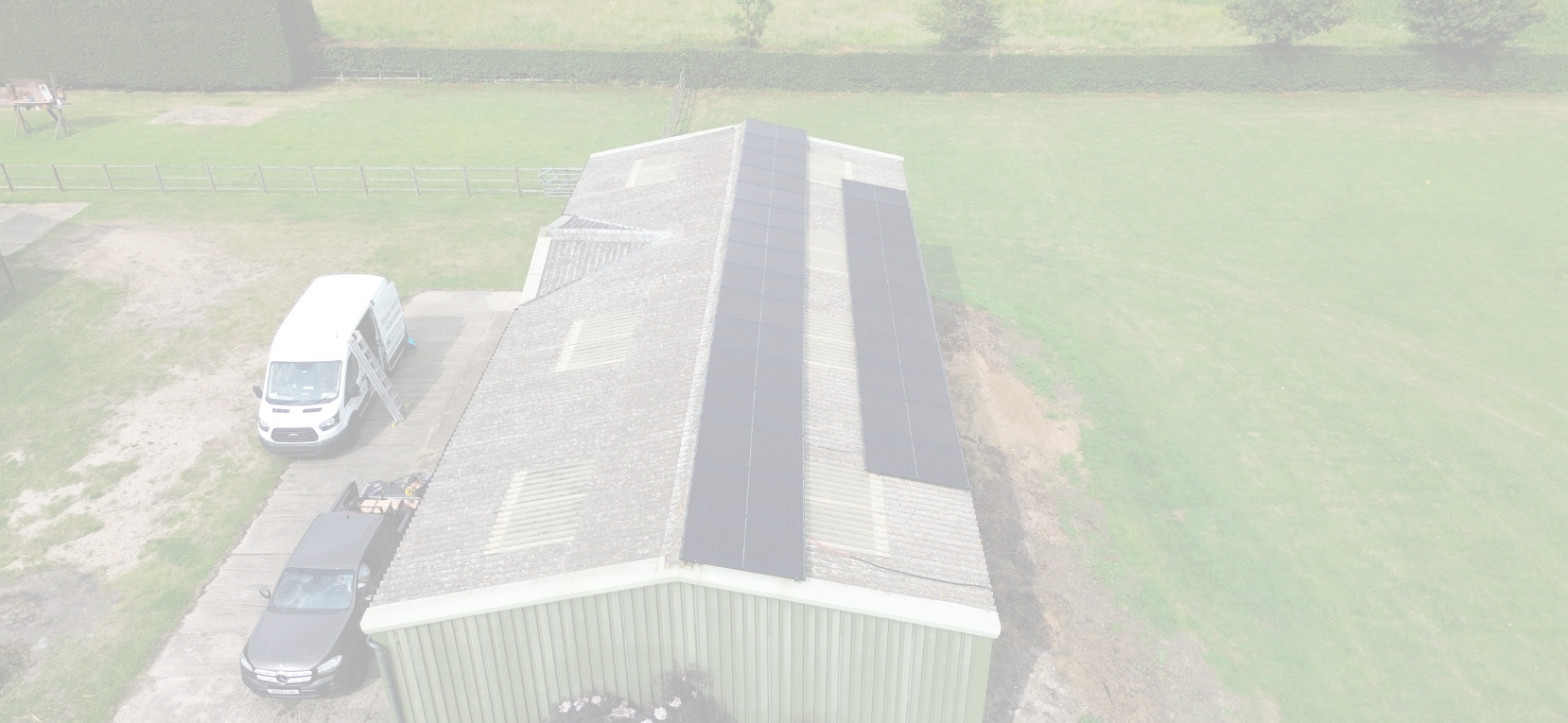
- Roof-mounted commercial solar PV
- Ground-mounted solar where appropriate
- Commercial battery storage
- Monitoring and energy management systems
- Grid connection works
- Electrical infrastructure upgrades
- EV charging integration for agricultural fleets
Every system should be designed around the site’s operational requirements rather than simply maximising installed capacity.
Planning a Successful Agricultural Solar Project
Before proceeding, a detailed feasibility study should assess:
- Roof suitability and structural capacity
- Available roof space
- Electricity consumption patterns
- Grid connection capacity
- Export limitations
- Future expansion opportunities
Understanding how the farm uses electricity is essential to designing a system that maximises self-consumption and long-term return on investment.
Long-Term Benefits for Farms and Rural Estates
A professionally designed commercial solar installation can deliver a range of long-term benefits, including:
- Reduced operating costs
- Greater energy independence
- Improved resilience against future electricity price volatility
- Support for ESG and sustainability objectives
- Integration with battery storage and future technologies
- Long-term infrastructure value
For many agricultural businesses, renewable energy is becoming an increasingly important part of long-term business planning.
How Silvercrest Energy Group Supports Agricultural Businesses
Silvercrest Energy Group designs and installs bespoke commercial solar PV systems for farms, estates and agricultural businesses across the UK.
Our services include:
- Commercial feasibility studies
- Site surveys and structural assessments
- Energy consumption analysis
- Financial modelling and ROI forecasting
- Bespoke system design
- Grid connection support
- Professional installation
- Operations and maintenance
Every project is tailored to the way your farm operates, ensuring the renewable energy system delivers measurable financial and operational benefits.
Final Thoughts
Although direct grant funding for commercial solar has become more limited, renewable energy continues to represent a strong long-term investment for many agricultural businesses.
When supported by appropriate finance, tax planning and a professionally engineered system, commercial solar can reduce operating costs, improve energy resilience and strengthen the long-term sustainability of farming operations.
A detailed feasibility assessment is the best place to begin, ensuring any investment is aligned with your farm’s energy demand, operational objectives and future growth plans.
Frequently Asked Questions
Are there grants available for farm solar panels in 2026?
Dedicated grant funding is more limited than in previous years. However, regional funding opportunities may occasionally become available, and many farms instead utilise finance options and tax relief where appropriate.
Can farms claim tax relief on commercial solar?
Many commercial solar projects may qualify for capital allowances, subject to current HMRC guidance and the individual circumstances of the business.
Is battery storage worthwhile for farms?
Battery storage can improve self-consumption, reduce peak electricity costs and increase energy resilience, particularly for farms with variable electricity demand.
Can agricultural buildings support commercial solar?
Many agricultural buildings are well suited to rooftop solar PV, although a structural survey and feasibility assessment should always be completed before installation.
How do I know if my farm is suitable for commercial solar?
A professional feasibility study will assess your buildings, electricity usage, grid connection and financial objectives before recommending the most appropriate solution.